
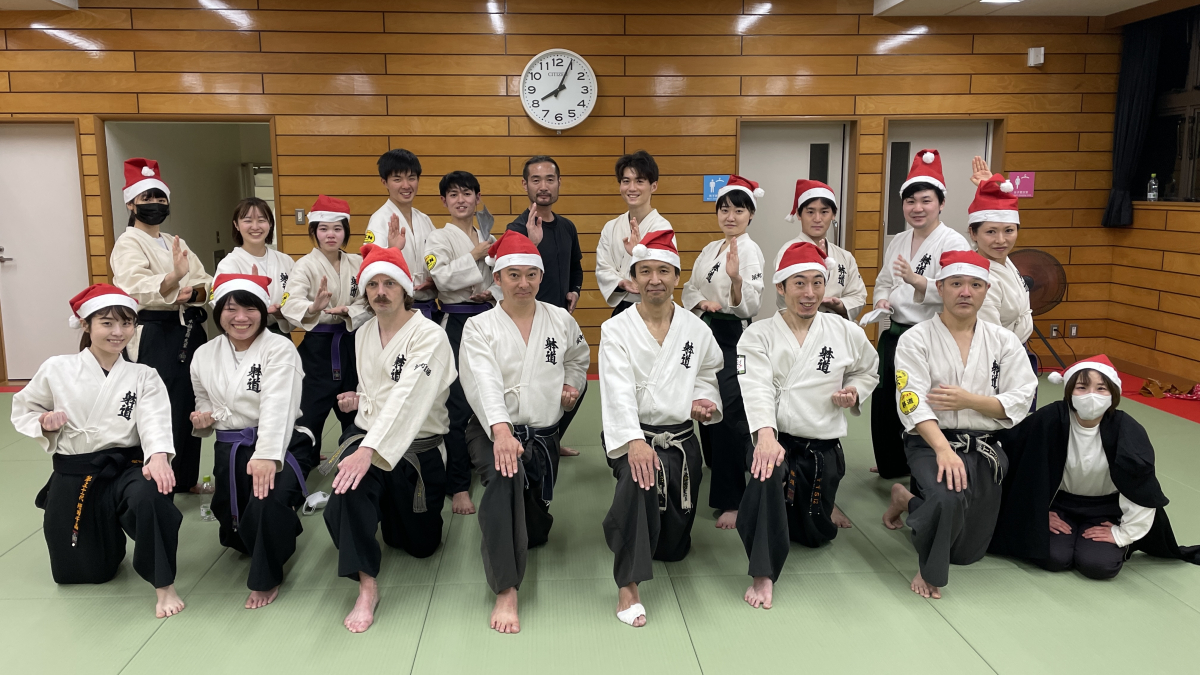
You've found it!
The only website on the entire internet with any substantive information in English about the Japanese martial art called Taido.
I'm glad you're here :)
My name is Andy Fossett, and since 1984, I've practiced, competed, and taught in the US, Japan, Australia, the Netherlands, Sweden, and Finland... I'll get around to visiting the other Taido countries soon :)
I currently hold the rank of 6th degree black belt kyoshi and teach at the Hamacho Dojo in Tokyo, Japan. I’m also the Director of the American Taido Association and General Secretary of the World Taido Federation.
🙋♀️ About Taido/Blog
Taido Articles & Info
Let's get to the good stuff. Most of the content here falls into one of four broad categories:
- Taido Theory and Technique
- Training and Practice Tips
- Thoughts on Teaching Taido
- Experiments and Ideas
Most of these articles were originally written around 2005, but I'm trying to keep everything updated, and I do sometimes add new info and ideas.
If there's something you'd like to learn about Taido that isn't covered, let me know.
Don't be a stranger...
This should be pretty obvious, but I'm pretty invested in this Taido thing - I love our art and the people who practice it.
If you practice Taido and need anything from me at all, please let me know how I can help.